

Manon Hily: The Journey of a Top-Level Climber
- 5 min reading

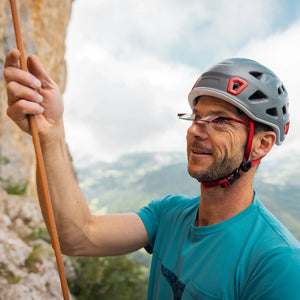
Three-time French champion in lead climbing and a member of the French national team for over fifteen years, Manon Hily has established herself as a leading figure in French climbing. The film *S’envoler* traces her journey, from her beginnings in Réunion to the central role that climbing plays in her life today.
Through the key stages of his development, he highlights the various aspects of his climbing practice—from bouldering to competition—and his lifestyle, as well as how climbing has shaped his outlook, far beyond mere performance.
Haven't seen*S'envoler* yet? It's available for free on YouTube— just click here.
A meeting that will change everything
Nothing really suggested that Manon Hily would follow this path. She discovered rock climbing in Réunion while accompanying her sister to a local club, 7 À L'OUEST. It was a simple setting, far removed from the standards of elite competition, but it was there that she made a fateful encounter: with her coach.
More than fifteen years later, he is still by her side. It is a rare relationship in elite sports, built on trust, consistency, and mutual understanding. From the very beginning, it has been about more than just making progress; it has been about building something for the long term.
At that point, climbing isn’t yet a given. But it gradually takes hold, eventually becoming an increasingly important part of his life.
From Fear to Passion: A Revelation on the Cliffs
The cliff wasn't something that came naturally right away. Like many climbers who started out indoors, the transition to outdoor rock climbing comes with its share of apprehensions: the height, the commitment, and the environment.
The turning point came during a trip to Thailand. It was a life-changing experience—almost overwhelming at first. The first few days were tough, filled with emotion, and at times even discouraging. Then, little by little, something began to change.
By the end of the trip, her goal had shifted: to attempt her first 8a. She didn’t succeed at the time, but the desire was there. Two years later, she returned and completed the route without difficulty. Between those two moments, she made significant physical progress and underwent a transformation in the way she approached climbing.
Today, the cliff takes center stage. There, it finds a more direct connection to the environment, a sense of freedom, and a different way of expressing itself.

Between rock climbing and competition: two complementary worlds
For Manon, rock climbing and competition aren’t driven by the same principles, but they feed off each other. In competition, everything is structured, intense, and immediate. The difficulty demands total commitment, where every move requires anticipation, adaptation, and precision.
In those moments, she describes a state akin to a trance—a complete immersion in the effort. The mind plays just as important a role as the body. It’s a level of intensity she knows well, after more than fifteen years on the French national team and several national titles in challenging events.
In contrast, the cliff offers a different relationship with time and performance. Fewer constraints, more freedom, but a different kind of commitment—one that is often more personal.
Navigating between these two worlds allows him to develop a comprehensive approach to climbing, in which technique, mindset, and intuition constantly complement one another.
Rock climbing as a source of personal fulfillment
Beyond just the sport itself, rock climbing has played a fundamental role in her personal development. As a child, Manon describes herself as shy, introverted, and lacking in confidence.
Climbing gives her a space where she doesn't have to prove anything to others. Little by little, she learns to trust herself, set goals, and push her limits. She no longer searches for her place; she builds it herself.
This development goes beyond the realm of sports. Climbing has become a way for her to assert herself, to understand who she is and how she wants to move forward.
The top level: striking a balance
Competing at the highest level demands a rigorous routine. Training, recovery, nutrition, and organization: everything must be structured in order to improve.
Nevertheless, Manon has chosen to keep a second job. She is a nurse, a profession that allows her to stay connected to a reality different from that of climbing. It’s an essential balance that gives her perspective and a sense of purpose.
This commitment requires constant adjustments. It means less free time and a more streamlined schedule, but it also requires a trusting relationship with one’s professional environment in order to continue training under favorable conditions.
The highest level involves compromises, but also conscious choices.
From Performance to Transmission
Over the years, climbing has also helped her build a network of strong relationships. Friendships, collaborations—a true “climbing family”—with whom she shares much more than just a sport.
Today, she also turns her attention to the younger generation. She observes how they approach climbing, their energy, and their spontaneity. It’s an approach she identifies with, and one that continues to inspire her.

The desire to pass on knowledge is a natural part of this process. It’s about showing that there’s no single path to success, and that progress depends not only on physical ability, but also on commitment, drive, and the effort one is willing to put in.
More than just a personal journey, it’s a way of life and a way to share the love of climbing that’s taking shape.
What's new?

New
24.90 €

New
Boulder Chalk Bag
Bouldering chalk Bag
37.90 €


New
Patented Product
SandwichBase climbing hangboards support
The smart, stable support for your hangboard - no holes, no tools.
4.85
(13 notice)
189.00 €
New
29.90 €

New
Climbing Mug Evo | Design Simon Favrot
EVO Mug - Design mug with climbing grip shapé by Simon Favrot: 3 models, 1 playful challenge, 100% climbing & style
5.0
(15 notice)
25.90 €

New
KeyHolder mountain edition wall-mounted key ring
Wooden wall key ring inspired by the great summits
5.0
(5 notice)
59.90 €